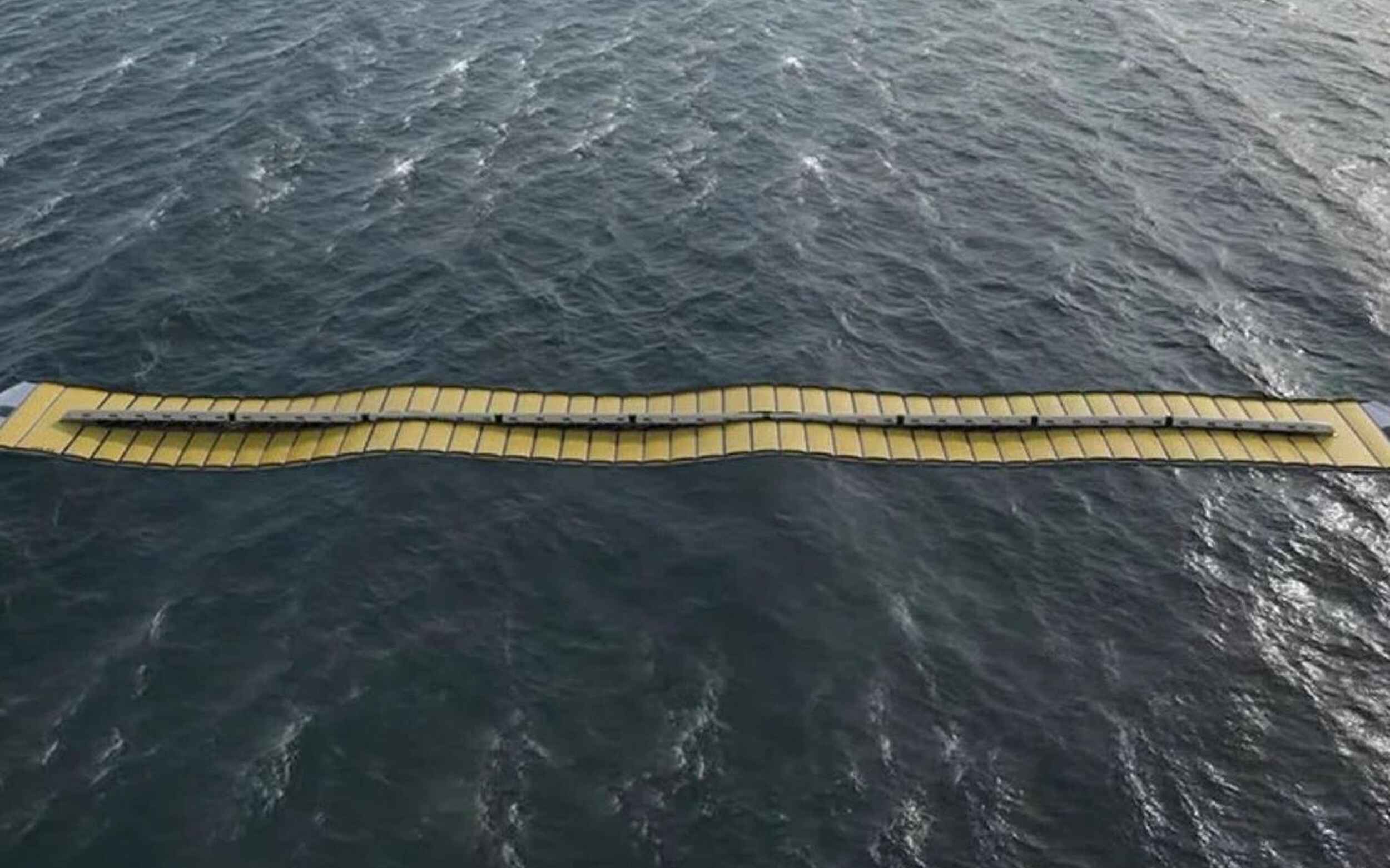
As international developers of cutting-edge renewable energy projects, we are frequently asked to define the various forms of clean power. The query "is wave energy renewable" is a common one, and the definitive answer is: Yes, wave energy is a renewable and highly sustainable energy resource.
The reason is that the energy itself is not a finite, combustible fuel. Rather, wave energy is, in technical terms, a highly concentrated form of solar energy. The resource is not depleted upon use and is constantly replenished by natural, inexhaustible processes.
For the semi-experienced enthusiast, understanding why it is renewable requires a brief analysis of its physical origin, which is distinct from other forms of marine energy.
The Technical Origin: How Wave Energy is Generated
Wave energy is an indirect product of solar power. The entire process is a chain of energy conversion:
1. Solar Insolation: The sun's energy heats the Earth's atmosphere unevenly.
2. Pressure Differentials: This uneven heating creates regions of high and low atmospheric pressure.
3. Wind Generation: Air moves from high-pressure to low-pressure areas, creating wind.
4. Wave Formation: As this wind blows across the vast surface of the ocean, it transfers kinetic energy to the water through friction. This "wind shear" creates ripples, which grow over time and distance (known as "fetch") into large, powerful ocean waves.
Therefore, the energy captured from a wave is simply solar energy that has been converted into atmospheric kinetic energy (wind) and then transferred and stored as mechanical kinetic energy (water movement). Because this process is driven by the sun, the resource is, by definition, renewable.
Harnessing this power is a significant technical challenge that has given rise to numerous "Wave Energy Converter" (WEC) designs. While many designs exist, they primarily fall into three categories, which we often analyze for their technical feasibility.
These are typically floating, buoy-like structures that are anchored to the seabed. They absorb energy from the "bobbing" vertical motion of the waves. As the buoy rises and falls, it drives a system of hydraulic pumps or a linear generator located inside the device. This "point absorber" is effective because it captures energy from all directions.
These are long, snake-like devices composed of multiple segments that float perpendicular to the oncoming waves. As the wave passes along the length of the device, it causes the different segments to flex and bend at their joints. This motion is then used to power hydraulic pumps, which in turn drive electrical generators.
An OWC is often a fixed or floating structure with a large, hollow chamber partially submerged in the water. As waves arrive, they enter the chamber and cause the internal water level to rise and fall. This movement acts like a piston, forcing the air in the chamber out and then sucking it back in. This bi-directional airflow is channeled through a special turbine (a Wells turbine) that is designed to spin and generate electricity regardless of the direction of the airflow.
A Critical Distinction: Wave Energy vs. Tidal Energy
From our expert perspective, it is critical to distinguish wave energy from tidal energy. This is the most common point of confusion for enthusiasts.
1. Wave Energy (the topic of this article) is caused by wind, which is caused by solar heating. It is variable and dependent on weather.
2. Tidal Energy is caused by the gravitational pull of the moon and sun. It is entirely predictable based on celestial mechanics, not weather.
While both are renewable forms of marine energy, their sources and technical behaviors are completely different.
Our Expert Conclusion
To answer the query directly: Yes, wave energy is a 100% renewable resource. It is a converted form of solar and wind energy, stored in the mechanical motion of the ocean's surface.
While it is not yet deployed at the same utility scale as solar photovoltaics or wind turbines, this is not due to its lack of renewability. Rather, the current challenges are technical and financial, primarily related to building cost-effective machines that can survive the harsh marine environment. As developers, we view wave energy as a vast, untapped resource that represents a significant future opportunity in the global energy transition.
Resources
International Energy Agency (IEA) - Wave Energy: https://www.iea.org/energy-topics/oceanOcean Energy Systems (OES): https://www.ocean-energy-systems.orgU.S. National Renewable Energy Laboratory (NREL) - Wave Energy: https://www.nrel.gov/research/wave.html