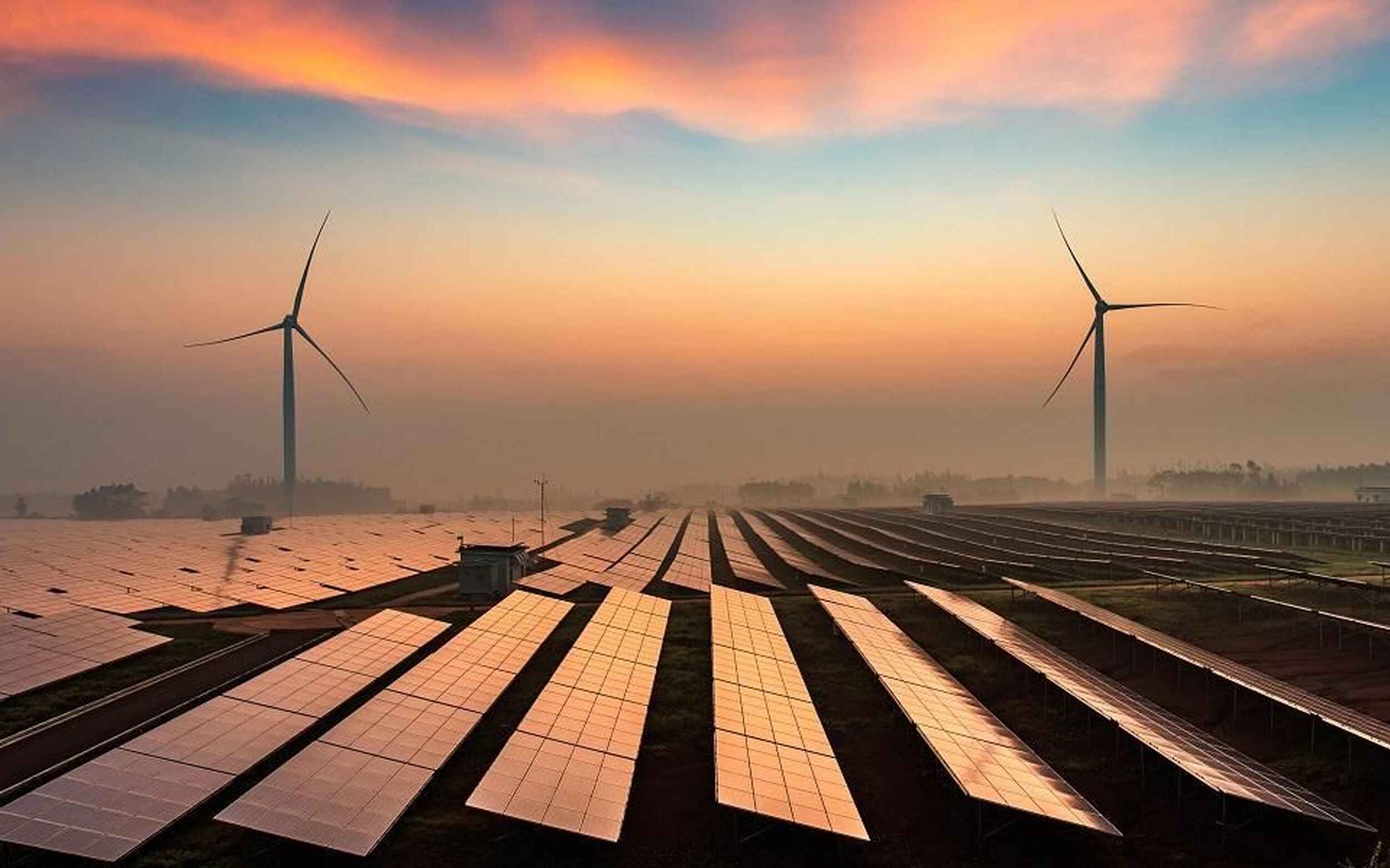
As international developers of cutting-edge renewable energy projects, the question "why should we use renewable energy" is not a philosophical one for us. It is the core premise of our work, and the answer is a technical, financial, and strategic imperative.
The transition to renewable energy is not driven by a single factor, but by a powerful convergence of three: environmental necessity, economic superiority, and strategic security.
From our expert perspective, the fundamental "why" is this: renewable energy shifts humanity from a finite, volatile, and polluting "stock" of consumable fuels to an infinite, stable, and clean "flow" of natural energy. We are moving from a system of extraction to a system of harvesting. This single shift provides the definitive answers to the query.
1. The Environmental Imperative: Operational Decarbonization
The most urgent reason to use renewable energy is its environmental impact, or more precisely, its lack of one during operation.
Mitigating Climate Change: The combustion of fossil fuels (coal, oil, and natural gas) is the primary driver of global climate change, releasing immense volumes of carbon dioxide (CO2) and methane (CH4) into the atmosphere. Renewable energy sources like solar (photovoltaic), wind, and geothermal do not combust any fuel to generate electricity. Their operation is fundamentally a clean conversion of energy (e.g., sunlight to electrons), not a chemical reaction. By displacing fossil fuel plants, renewable energy directly decarbonizes the grid, making it our single most powerful tool for mitigating climate change.
Improving Public Health: The "why" is also a matter of immediate public health. Fossil fuel combustion releases more than just CO2; it emits sulfur oxides (SOx), nitrogen oxides (NOx), and particulate matter (PM2.5). These pollutants are the primary causes of smog, acid rain, and a host of respiratory illnesses. By switching to renewables, we are not only protecting the global climate but also cleaning the air we breathe and the water we drink, saving millions of lives and reducing public health costs.
2. The Economic Justification: Cost, Stability, and Growth
For decades, the economic argument was the main barrier to renewables. Today, it is their greatest accelerator.
Achieving the Lowest Levelized Cost of Energy (LCOE): We analyze all projects through their Levelized Cost of Energy (LCOE), the total lifetime cost of the asset divided by its total lifetime energy production. Due to massive technological advancements and economies of scale, the LCOE of new utility-scale solar and wind has plummeted. It is now, in most regions of the world, the cheapest form of new electricity generation in history. It is often cheaper to build a new solar or wind farm than to simply continue operating an existing coal plant.
Insulating Economies from Fuel-Price Volatility: The "fuel" for a solar plant (sunlight) and a wind farm (wind) is free and inexhaustible. This is a profound financial shift. A conventional power plant is a slave to the volatile, geopolitically-driven global commodity market for coal and natural gas. A spike in fuel prices can cripple an economy. A renewable power plant has zero fuel cost. It is a fixed-price asset that "locks in" a low, stable, and predictable electricity price for 25+ years, acting as a powerful hedge against inflation and market volatility.
Driving Technological Innovation and Job Creation: The energy transition is the largest economic and industrial shift in a century. As we develop, finance, and deliver projects globally, we are part of a massive new industry. This transition is driving innovation in material science, battery storage, thermal storage, green hydrogen, e-methanol, grid management software, and artificial intelligence. This, in turn, creates millions of high-quality, long-term jobs in manufacturing, construction, operations, and engineering.
3. The Security & Resilience Imperative
Often overlooked, the strategic case for renewables is a critical "why" for national governments and grid operators.
Reducing National Dependence on Energy Imports: Many nations are 100% dependent on foreign countries for their oil and natural gas. This reliance creates profound geopolitical vulnerabilities and trade imbalances. Renewable energy is local energy. The sun and wind are domestic resources that cannot be embargoed or controlled by a foreign power. By building domestic renewable generation, a nation enhances its energy independence and national security.
Enhancing Grid Resilience with Distributed Assets: The traditional grid is a centralized, "hub-and-spoke" model, a few massive power plants pushing power one-way. This is efficient but brittle; if a single large plant or transmission line fails, it can cause cascading blackouts. The renewable model, which includes our development of battery storage, is decentralized and distributed. A grid powered by thousands of solar farms, wind projects, and storage batteries is far more resilient, flexible, and capable of isolating failures, much like the modern internet is designed to route around a single point of failure.
Our Expert Conclusion
To answer "why should we use renewable energy" is to state the obvious from our professional vantage point. We should use it because it is cleaner (the environmental imperative), cheaper (the economic justification), and safer (the security imperative).
The question is no longer why we should make this transition, but how we can accelerate it. The drivers for this change are no longer just ethical, but are now overwhelmingly technical, financial, and strategic.
Resources
International Renewable Energy Agency (IRENA) - Benefits: https://www.irena.org/benefitsInternational Energy Agency (IEA) - Renewables: https://www.iea.org/energy-topics/renewablesLazard's Levelized Cost of Energy Analysis (LCOE): https://www.lazard.com/research-insights/levelized-cost-of-energy-levelized-cost-of-storage-and-levelized-cost-of-hydrogen-v170